

What is AI Token Pricing?

Written by Arnon Shimoni
✓ Expert
Last updated on:
AI token pricing is a consumption-based (or “Usage based”) model where customers pay for AI services based on the number of tokens processed. Very frequently in LLMs, token is a unit of text, roughly 3/4 of a word in English, that AI models use to measure input and output. Instead of paying a flat monthly fee or a seat-based fee, customers pay proportionally to what they consume.
While tokens are a fundemental piece of how modern AI works, this model of pricing emerged because AI workloads are different from traditional SaaS. A seat-based CRM costs the same to serve whether a rep logs in once or a thousand times. An AI model costs real money every time it runs inference. Token pricing passes that variable cost structure through to the customer.
What is an AI token?
An AI token is the unit of text a language model reads and generates. In English it’s roughly 3/4 of a word, or about 4 characters. Models don’t work in words or letters, they work in tokens, and everything you send to a model or get back from it gets counted in them.
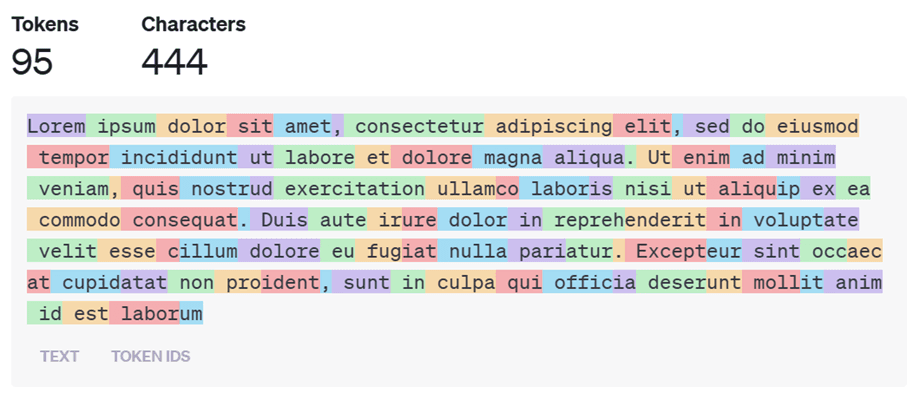
(Image from Understanding AI Tokens and Their Importance)
Tokens are sub-word fragments that language models use to process text. The word “monetization” might be split into three tokens (“mon”, “etiz”, “ation”), while common words like “the” are typically a single token. Different providers use different tokenizers, so the same text can produce different token counts across platforms.
Tokens matter for pricing because they’re what providers meter. Every token a model processes runs a step of inference on a GPU, which costs real money.
So when AI providers charge per token instead of the flat seat-based fee you’d see in traditional SaaS, the Input (your prompt) and output (the model’s response) are counted separately and priced separately.
How are AI tokens priced?
Pricing is set per million tokens (MTok), with separate rates for input tokens (your prompt) and output tokens (the model’s response). Output tokens are almost always more expensive, typically 3-5x the input price, because generating text requires more compute than reading it.
What does MTok (per million tokens) mean?
MTok means “per million tokens.” It’s the standard unit AI providers quote prices in. When a model is listed at $5/MTok, you pay $5 for every one million tokens processed. Input and output have separate MTok rates, e.g., Claude Opus 4.8 at $5 per MTok input and $25 per MTok output.
A single token costs a tiny fraction of a cent, so per-million is just the readable way to write the price.
A simple API call works like this: you send a prompt (input tokens), the model processes it and generates a response (output tokens), and you’re billed for both. The formula is straightforward:
Cost = (input tokens / 1M × input price) + (output tokens / 1M × output price)
Where it gets complicated: different models, different modalities (text, image, video, code), and different processing modes (standard, batch, cached) all carry different rates. A simple text completion is cheap. A multi-modal request with image analysis and long-form reasoning output is expensive.
Do AI tokens really cost money, and why are they so expensive?
Yes, AI tokens cost money. There’s no free token “at scale” because every token a model reads or writes runs a GPU inference step, and the provider passes that cost through.
It’s actually fascinating, because inference is complicated.
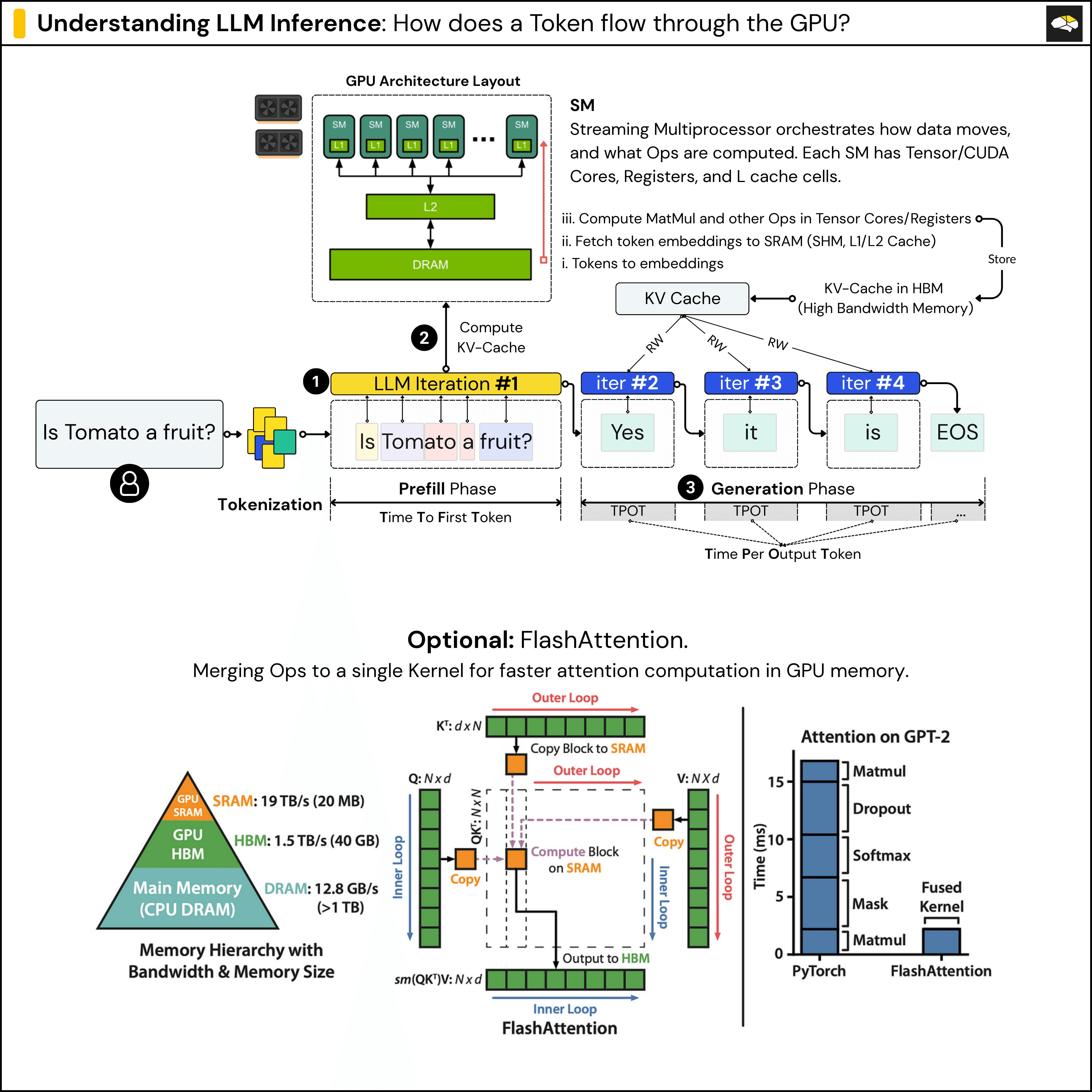
(Image via Alex Razvant’s Understanding LLM Inference)
While a single API call costs a fraction of a cent, production apps process millions of tokens a day, so it adds up really fast.
Generally, output is the expensive part because generating text takes more compute than reading it, and therefore output tokens usually cost 3-5x more than input.
Flagship models run roughly $2 to $5 per million input tokens and $4 to ~$30 per million output. Budget models like Gemini 3.5 Flash-Lite goes down to to $0.30 per million input. The reason the same request can cost 100x more on one model than another comes down to model size, modality, and which processing mode you pick (all covered below).
Some providers hand out free tokens as a trial allowance, but the underlying inference is never free. Someone always pays for the compute, which is exactly why token economics matter the moment you start reselling AI to your own customers.
What is the cost per token for AI models?
Cost per token is tiny in isolation, which is why nobody quotes it that way. Providers price per million tokens (MTok, again): flagship models run roughly $2 to $5 per million input tokens and $12 to $30 per million output. Lightweight models go far lower, down to $0.075 per million input on Gemini 2.0 Flash-Lite. So a single token costs somewhere between a few millionths and a few hundred-thousandths of a dollar, depending on the model and whether it’s input or output. You rarely pay per token directly. You pay per million, and your bill is total tokens processed times your rate card. The full per-provider breakdown is in the comparison below.
AI token pricing comparison: how do major providers compare?
Pricing varies dramatically across providers. As of May 2026, here’s how the major players stack up on their flagship and budget models:
Flagship models (highest capability)
Provider | Model | Input (per 1M tokens) | Output (per 1M tokens) | Context window | Notes |
|---|---|---|---|---|---|
OpenAI | GPT-5.5 | $5.00 | $30.00 | 1M | Latest flagship; cached input at $0.50; Pro tier at $30/$180 |
OpenAI | GPT-5.4 | $2.50 | $15.00 | 1M | Previous flagship; cached input at ~$0.25 |
Anthropic | Claude Opus 4.7 | $5.00 | $25.00 | 1M | Latest; cached input at $0.50 |
Anthropic | Claude Sonnet 4.6 | $3.00 | $15.00 | 200K (1M beta) | Long-context: $6/$22.50 over 200K input |
Gemini 3.1 Pro Preview | $2.00 | $12.00 | 1M+ | Over 200K tokens: $4/$18; cached input doubles at threshold | |
xAI | Grok 4.3 | $1.25 | $2.50 | — | — |
DeepSeek | V4 Pro | $0.435 | $0.87 | 128K | Promo pricing through May 31; cached input at $0.003625 |
Budget and lightweight models
Provider | Model | Input (per 1M tokens) | Output (per 1M tokens) | Context window | Best for |
|---|---|---|---|---|---|
OpenAI | GPT-5 Mini | $0.25 | $2.00 | 128K+ | Routing, classification, simple tasks |
OpenAI | GPT-5 Nano | $0.05 | $0.40 | 128K | Highest volume, lowest cost |
Anthropic | Claude Haiku 4.5 | $1.00 | $5.00 | 200K | Fast responses, high-volume apps |
Gemini 2.5 Flash | $0.15 | $0.60 | 1M | Long-context on a budget | |
Gemini 2.0 Flash-Lite | $0.075 | $0.30 | 1M | Cheapest mainstream option | |
xAI | Grok 4.1 Fast | $0.20 | $0.50 | 2M | Largest context window available |
DeepSeek | R1 | $0.55 | $2.19 | 128K | Reasoning at budget pricing |
Prices from official provider documentation as of May 2026. Token pricing changes frequently. Always verify current rates before committing!
The cost spread continues to widen. Running the same 1M-token workload on Claude Opus 4.7 costs roughly 30x more on output than on DeepSeek V4 Pro at its standard rate and over 100x more at DeepSeek’s current promotional pricing. That doesn’t mean the cheaper model is the right choice. Capability, reliability, safety, latency, and enterprise support all factor in. But the cost differential explains why model routing, sending simple tasks to cheap models and only escalating complex ones, has become standard practice.
For side-by-side rates on specific providers, see our OpenAI vs Gemini pricing guide and the Kimi K3 pricing breakdown from July 2026.
Pricing complexity: it’s not just per-token anymore
Selecting a model now also means selecting a processing mode. GPT-5.5 is available across standard, batch, flex, and a “Pro” tier at $30/$180 per million tokens which is a 6x range in output pricing on the same underlying model. Gemini 3.1 Pro Preview charges $2/$12 for prompts under 200K tokens, then $4/$18 above that threshold; cached input doubles at the same point. Qwen3.6 Plus has a 256K threshold with similar doubling. The practical effect: prompt architecture now has a pricing dimension alongside quality and latency.
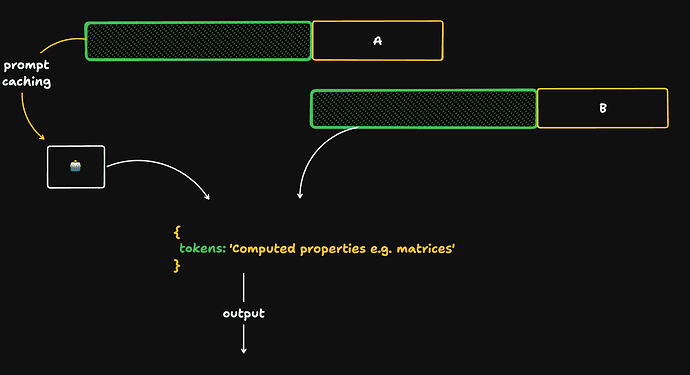
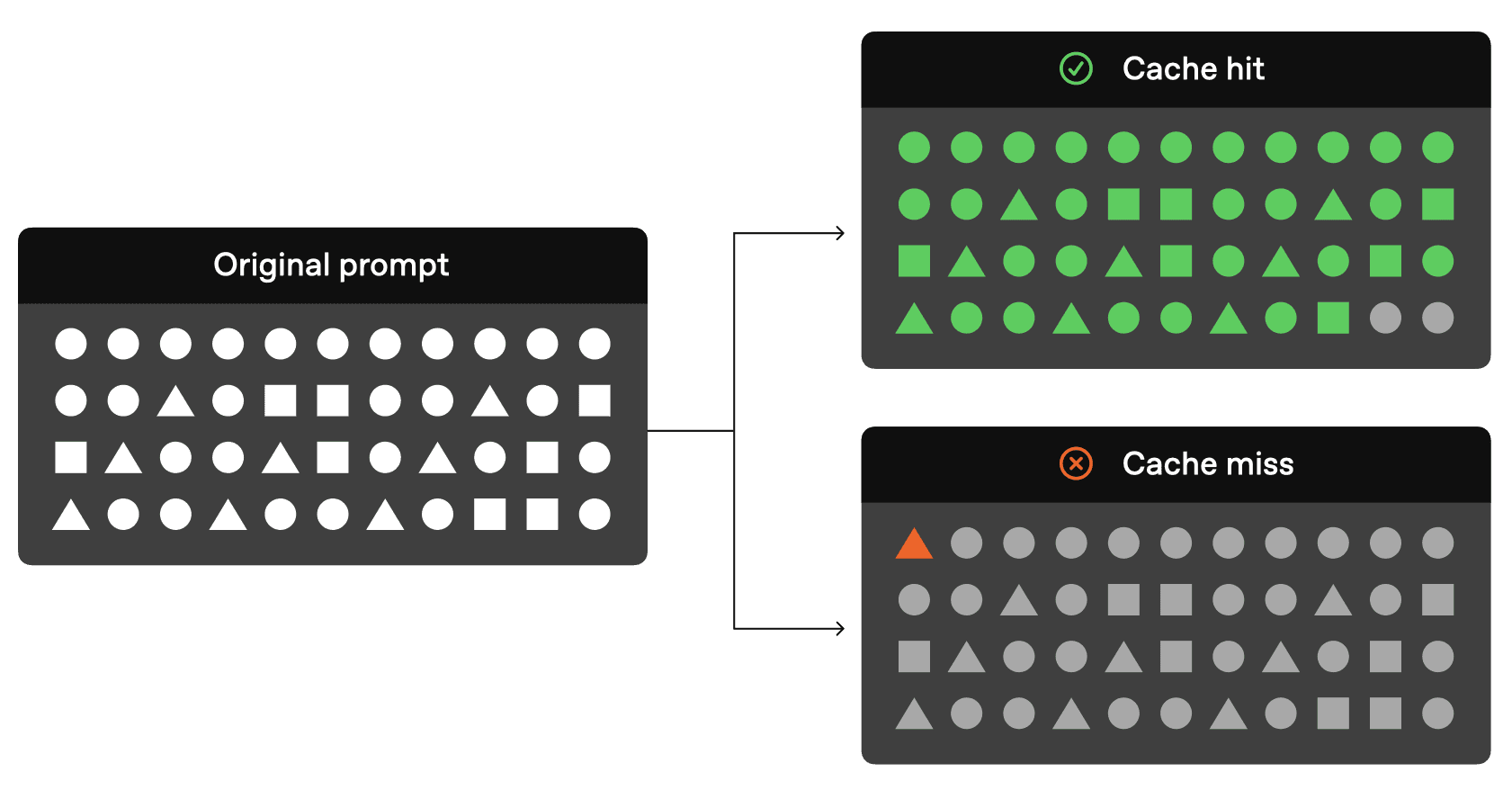
(Images from OpenAI’s prompt caching guide)
Prompt caching has also moved from optional feature to standard pricing component. Claude Opus 4.7 caches at $0.50 per million input tokens versus $5 fresh, a 10x discount. DeepSeek V4 Pro’s cache rate is $0.003625 per million, roughly 120x cheaper than its non-cached input price. All major providers now offer some form of cache pricing.
One more number worth tracking: OpenRouter’s analysis found that GPT-5.5 real-world costs ran 49-92% higher than GPT-5.4 for typical usage patterns, despite GPT-5.5 being positioned as a straightforward upgrade. Headline rates and effective spend are diverging as pricing structures multiply.
What factors influence the cost per token for large language models?
Token pricing isn’t arbitrary. Several structural factors determine what providers charge and what you end up paying:
Factor | How it affects pricing | Example |
|---|---|---|
Model size and capability | Larger, more capable models cost more to run | GPT-5.5 Pro at $30/$180 vs. GPT-5 Nano at $0.05/$0.40 |
Input vs. output | Output tokens cost 3-8x more because generation is compute-intensive | Claude Opus 4.7: $5 input vs. $25 output (5x ratio) |
Prompt caching | Repeated prompts can be cached for 50-120x savings | DeepSeek V4 Pro: $0.003625 cached vs. $0.435 fresh (~120x discount) |
Batch vs. real-time | Asynchronous processing (24hr window) costs ~50% less | Anthropic Batch API: Sonnet 4.6 drops to $1.50/$7.50 |
Context length | Longer contexts can trigger premium pricing tiers | Gemini 3.1 Pro: $2/$12 under 200K tokens, $4/$18 above; Sonnet 4.6: $3/$15 → $6/$22.50 |
Modality | Image, audio, and video processing cost more than text | OpenAI image generation priced per image, not per token |
Processing tier | Priority/fast modes charge premiums for lower latency | Claude Opus 4.7 fast mode: 6x standard rates |
Volume commitments | Enterprise agreements lower per-token rates | Custom pricing available from all major providers at scale |
GPU costs and competition | Infrastructure improvements and competition drive prices down | Model costs have dropped roughly 10x every 18 months |
The most impactful lever for most teams is model selection. Sending every request to a flagship model when 70-80% of tasks could be handled by a lightweight model is the most common source of overspending. Teams that implement intelligent routing typically cut API costs by 50-70% without noticeable quality loss.
Input vs Output tokens
Input tokens are the data sent into the AI model, whereas output tokens are the streaming text that the model generates and sends back. The main differences between the two lie in how they function within the model’s generation process, what kind of content they represent, and how much they cost:
Function in the AI loop: The model evaluates all input tokens at once as a massive list in order to predict and produce a single output token. Because the model operates in a continuous loop, newly generated output tokens are appended to the context and fed back into the system, meaning past output tokens continually become part of the new input tokens for the next calculation.
Types of content: Input tokens make up the context provided to the model. This includes the unseen system prompt (the overarching instructions the developers give the AI), the user’s specific query, and the contents of any files loaded into the chat. Output tokens consist of the model’s internal “thought process,” automated tool calls (such as a command asking the system to read a specific file), and the final visible response presented to the user.
Cost differences: Output tokens are substantially more expensive than input tokens. Modern AI providers typically charge around $2 to $3 per million input tokens, compared to approximately $15 per million output tokens.
However, even though input tokens have a cheaper rate, they are often responsible for the massive cost of complex tasks like AI coding. Because the AI processes inputs on a loop, every single output token generated forces the system to re-read the ever-expanding list of input tokens (including any newly requested files or earlier thoughts) all over again, causing the total volume of input tokens processed to snowball rapidly.
What is token-based pricing, and how is it different from token-based billing?
Token-based pricing charges customers for what they consume, measured in tokens processed, instead of a flat per-seat fee. It’s a form of usage-based pricing where the unit is the token. A customer running 10 million tokens a month pays for 10 million tokens, not for a license.
Token-based billing is the mechanics underneath: metering every inference call, applying a rate card, and turning that into an invoice. Pricing is the strategy, what you charge for. Billing is the infrastructure, how you count and collect. Most teams get the pricing right on a spreadsheet and then find the billing is the hard part, especially once they add multiple models, cached vs uncached rates, and committed-spend deals on top.
How does that translate? Well, read on.
The translation problem: tokens vs. value
As you understand, token pricing creates a transparency challenge when you’re building products for non-technical buyers. Most of us tend to think in tasks or getting things done, not in how many tokens it took.
As a PM, I rarely asked myself “how many tokens will this cost?” - more often than not I’d figure out “can I summarize 50 documents a month?” - a much better question.
This gap between how AI is metered (tokens) and how value is perceived (outcomes) is why most customer-facing AI products don’t expose raw token pricing directly. Instead, they translate tokens into something the buyer understands.
Translation layer | How it works | Example companies |
|---|---|---|
Tokens abstracted into a proprietary unit. Different actions consume different credit amounts | Clay, ElevenLabs, Descript | |
Workflow units | Pricing expressed per task completed, not per token | “Per document analyzed,” “per meeting transcribed” |
Bundled into seats | AI usage included in a per-user fee with usage limits | Notion AI, GitHub Copilot |
Tiered usage caps | Flat fee includes X usage per month, per-unit charges beyond | Cursor, ChatGPT Plus/Teams |
Price tied to a measurable result | Intercom Fin: $0.99 per resolved ticket |
Each of these is a packaging decision on top of the underlying token economics. The AI provider still pays per token underneath. The question is how that cost gets expressed to the end customer, and whether your billing infrastructure can handle the translation.
Learn more about credit-based pricing in our deep dive on credit architecture.
What is an AI token budget, and who pays for AI tokens?
An AI token budget is a cap on how many tokens a user, team, or app can consume in a period, used to control spend. It works like a cloud budget: set a ceiling, get alerts as you approach it, then throttle or charge for overage past it. Product teams use token budgets to stop a single power user from running up an unbounded bill. Who pays what depends on where you sit in the chain.
The app builder pays the model provider (OpenAI, Anthropic, Google) per token.
The end customer usually pays the app builder, but almost never in raw tokens. They pay in credits, workflow units, or a subscription that bundles usage.
The difference between what the builder is billed (tokens) and what the customer pays (something legible) is the translation problem mentioned above. Do note that when token budgets are locked to individual users instead of pooled at the organization level, you get stranded allocations - meaning power users hit their cap while casual users sit on unused tokens, and both sides lose trust.
Where token pricing fits in the pricing model landscape
Token pricing sits at the most granular end of the pricing spectrum. Infrastructure buyers with the technical ability to forecast usage handle raw token pricing fine. Business buyers who need cost predictability typically need an abstraction layer on top of it.
Model | Unit of measure | Cost predictability | Value alignment | Who it works for |
|---|---|---|---|---|
User count | High | Low (AI breaks the user-value link) | Simple SaaS, collaboration tools | |
Token-based | Raw tokens processed | Low (hard to forecast) | Medium (tracks usage, not outcomes) | API products, developer tools |
Abstracted units | Medium | Medium-High (maps to actions) | AI products with multiple resource types | |
Per-workflow | Tasks completed | High | High | Vertical AI with bounded task complexity |
Business result | High | Highest | Products with clear, attributable results |
Most companies that start with raw token pricing eventually layer an abstraction on top. Credits, bundled tiers, or workflow-based pricing give customers the predictability they need while preserving margin awareness underneath.
The economics: why token pricing changes the game
Token pricing forces margin awareness in a way that seat-based SaaS never did.
SaaS economics | AI token economics | |
|---|---|---|
Cost per unit | Near-zero marginal cost per user | Variable cost per inference |
Underpricing risk | Growth tactic (land and expand) | Margin killer (losses compound with usage) |
Heavy users | Cost the same to serve | Can be loss-making at flat rates |
Expansion revenue | Seat growth = pure revenue | Usage growth = revenue AND cost growth |
Typical gross margin | 70-85% | 30-60% depending on model and workload |
Some AI companies have found their top 5% of users consuming 75% of total compute costs while paying the same flat fee as everyone else. Token pricing, or a derivative of it, is one way to fix that misalignment.
What to watch for
Token pricing has several known failure modes that show up as companies scale.
Unpredictable bills: Customers who can’t forecast spend get nervous. CFOs don’t approve open-ended consumption commitments without guardrails. This is why committed-spend models (annual commitments with token drawdown) are becoming more common than pure pay-as-you-go.
Price compression: When you price on tokens, you’re pricing on a commodity, and the GPUaaS billing rates behind the model are dropping too. Model costs have been dropping roughly 10x every 18 months. Customers expect those savings to pass through. Pure token pricing becomes a race to the bottom unless you layer value on top.
Billing complexity: Multiple models, multiple modalities, input vs. output pricing, cached vs. uncached tokens, fine-tuned model surcharges, batch vs. real-time rates, and now processing-mode tiers within a single model. GPT-5.5 alone spans at least four pricing modes with a 6x output price range. The permutations multiply fast. Your billing system needs to handle this granularity without requiring engineering work for every pricing change.
Revenue recognition: Prepaid token balances are liabilities until consumed. Expired tokens need proper accounting treatment. Companies that ignore this early build ad-hoc balance logic that doesn’t map to ASC 606 or IFRS. This becomes painful during due diligence, M&A, or audit preparation.
The stranded credits problem”: When token allocations are locked to individual users rather than shared across an organization, you get artificial “breakage.” Power users hit limits while casual users sit on unused balances. This erodes trust and accelerates churn. The better approach: organization-level pools with per-user guardrails.
Token pricing and billing infrastructure
Token pricing sounds simple in theory but in real life, it requires infrastructure that most billing systems weren’t designed for.
You need real-time metering that ingests usage events at scale. You need flexible rate cards that map different token types to different prices without code changes. You need balance management for prepaid models. You need transparency tools so customers can track consumption. And you need all of this to feed into invoicing and revenue recognition.
Most companies start by building this on top of Stripe or a homegrown system. It works until it doesn’t. Usually around the time you’re managing multiple models, multiple customer segments with different rates, or enterprise contracts with committed-spend structures layered on top of token consumption.
That’s the billing v1 to billing v2 transition. Not because the first system was bad, but because the pricing model outgrew the infrastructure underneath it.
Learn more about this transition in our post on hybrid pricing and why most companies end up combining seats, usage, and credits as they scale.
FAQ for CTOs
What are the best practices for creating a flexible pricing model?
Decouple pricing from your application code. The rate card should live as configuration, not as an if statement in your billing service - and definitely not duplication of plans and products.
From there: meter usage independently of how you eventually charge for it (token counts, seats, and outcomes are just different lenses on the same event stream), price in whatever unit maps to how the customer perceives value, and build the system so a new tier is a config change, not a deploy. Vercel ships 5-6 pricing changes a month. That’s evidence flexible pricing is an infrastructure decision, not a strategy document.
How can I set up real-time visibility for token economics?
You need usage priced as it happens, not batched overnight.
That means an event pipeline that captures every inference call with its model, token count, and cost, a pricing engine that applies your current rate card to that event immediately, and a dashboard or API that surfaces margin per customer, not just revenue per customer. Most teams piece this together with a queue and a nightly job, which is how a CFO finds out about a margin problem three months after it started instead of the day it started.
How can I experiment with different pricing models without lengthy engineering sprints?
If pricing logic is hardcoded into your product, it’ll be very hard. You want to have rate cards that product and growth teams can edit directly, with engineering only pulled in for genuinely new metering logic (a new event type, a new modality), not for every price or packaging change. Solvimon uses rate-cards, as do other enterprise-grade systems like Zuora. More basic systems like Stripe don’t have rate-cards so repricing can be quite challenging (on the operations side).
What tools can help streamline usage-based billing integration?
Usage-based billing tools generally fall into two camps: metering-and-pricing platforms (Orb, Metronome, OpenMeter, Stripe Billing) that handle rate cards and invoicing, and full monetization infrastructure (Solvimon) that also covers revenue recognition, multi-entity billing, and entitlements. Most companies start with the first camp because it’s faster to integrate. The gap shows up later: metering tools track usage well, but few were built to also handle the accounting treatment of prepaid balances or the reconciliation across seats, usage, and credits once all three are running at once. Solvimon handles metering, pricing, and revenue recognition as one system, which is usually the point where companies migrate.
How do I effectively track usage across multiple pricing dimensions?
Track every dimension against one ledger, not three parallel systems. A customer paying for seats, token usage, and outcome-based credits still gets one bill, and if seat counts live in your CRM, token usage lives in a metering tool, and credits live in a spreadsheet, reconciliation becomes someone’s manual job every close. The better pattern is org-level usage pools with per-user guardrails: usage rolls up to the account, not the individual seat, so a light user’s unused allocation covers a heavy user’s overage instead of creating stranded credits on both sides.
What are common pitfalls in token economics for startups?
Three show up most often.
Treating prepaid token balances as a bookkeeping afterthought instead of a liability that needs proper revenue recognition under ASC 606, which gets difficult to unwind during due diligence.
Locking token allocations to individual users instead of the organization, which creates artificial breakage and erodes trust when power users hit limits while casual users sit on unused balances.
Having limited or no per-customer margin visibility until month-close, so a top 5% of users consuming 75% of compute at a flat rate goes unnoticed until the P&L already shows it.
Related
AI agent pricing. How vendors charge for autonomous agents, and where it differs from paying per token.
OpenAI vs Gemini pricing. Current per-token rates for OpenAI and Google models, side by side.
AI credit pricing models. The tradeoffs between charging in tokens, credits, and hybrid plans.
Token factory. GPU operators moving up the stack to sell token-metered inference instead of raw compute.
Kimi K3 pricing. What an open-weight frontier model costs against the closed-lab rate cards.
Ready for billing v2?
Solvimon is monetization infrastructure for companies that have outgrown billing v1. One system, entire lifecycle, built by the team that did this at Adyen.