

Usage-based billing grew 7x in a year

News
Read time: 3 min
We now know seat-based pricing had a good run because for most of the last decade, it was the default - it just worked. It was predictable for buyers, easy to model for finance, simple to invoice, and sales could quote it in their sleep.
What we're seeing on our platform tells a different story now. No, seat pricing isn't "dying" - but it is becoming one input among many.
Companies are layering different pricing one on top of the other.
Usage based up 7x, pricing complexity up 100%
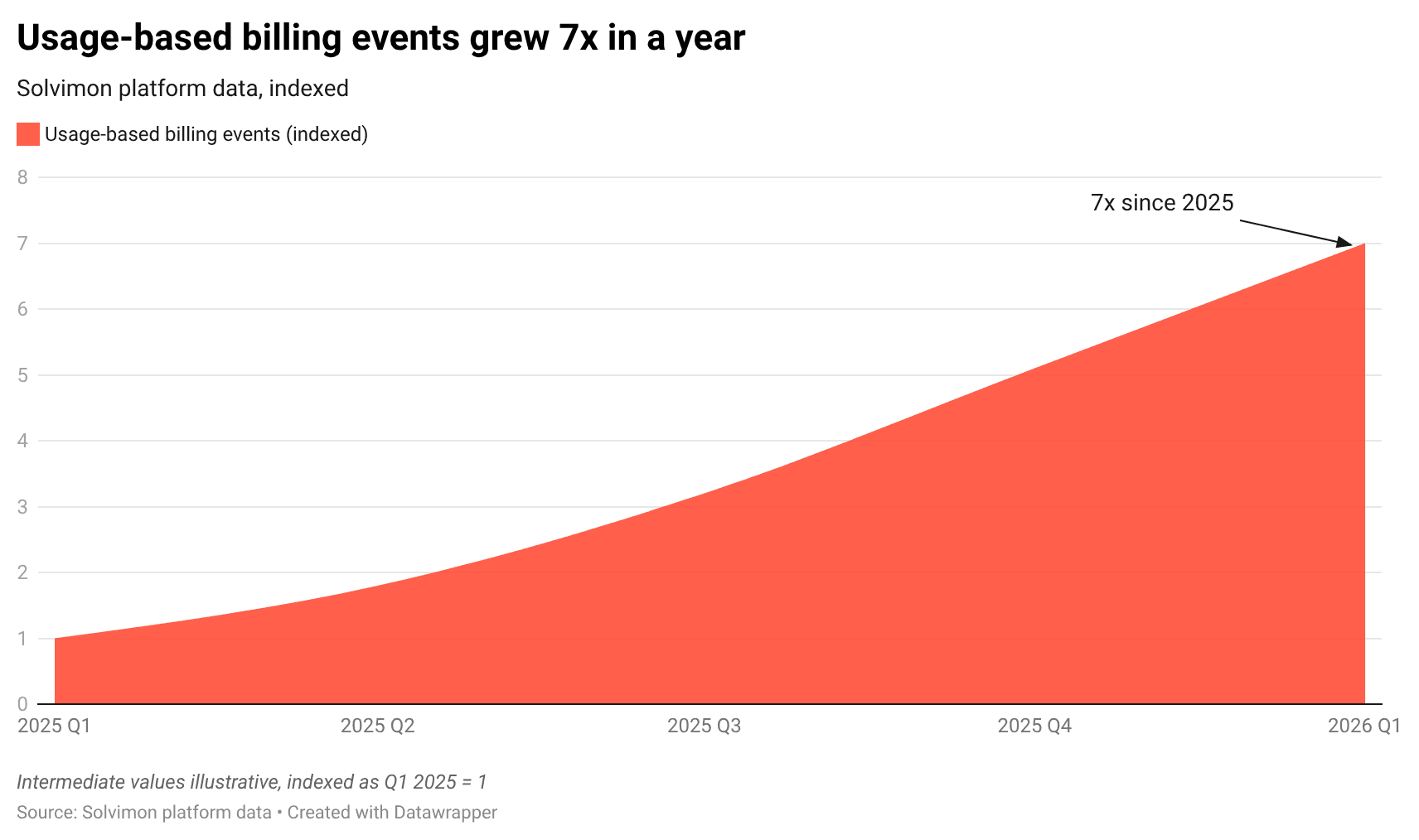
Usage-based billing events on Solvimon's platform grew 7x since Q1 2025.
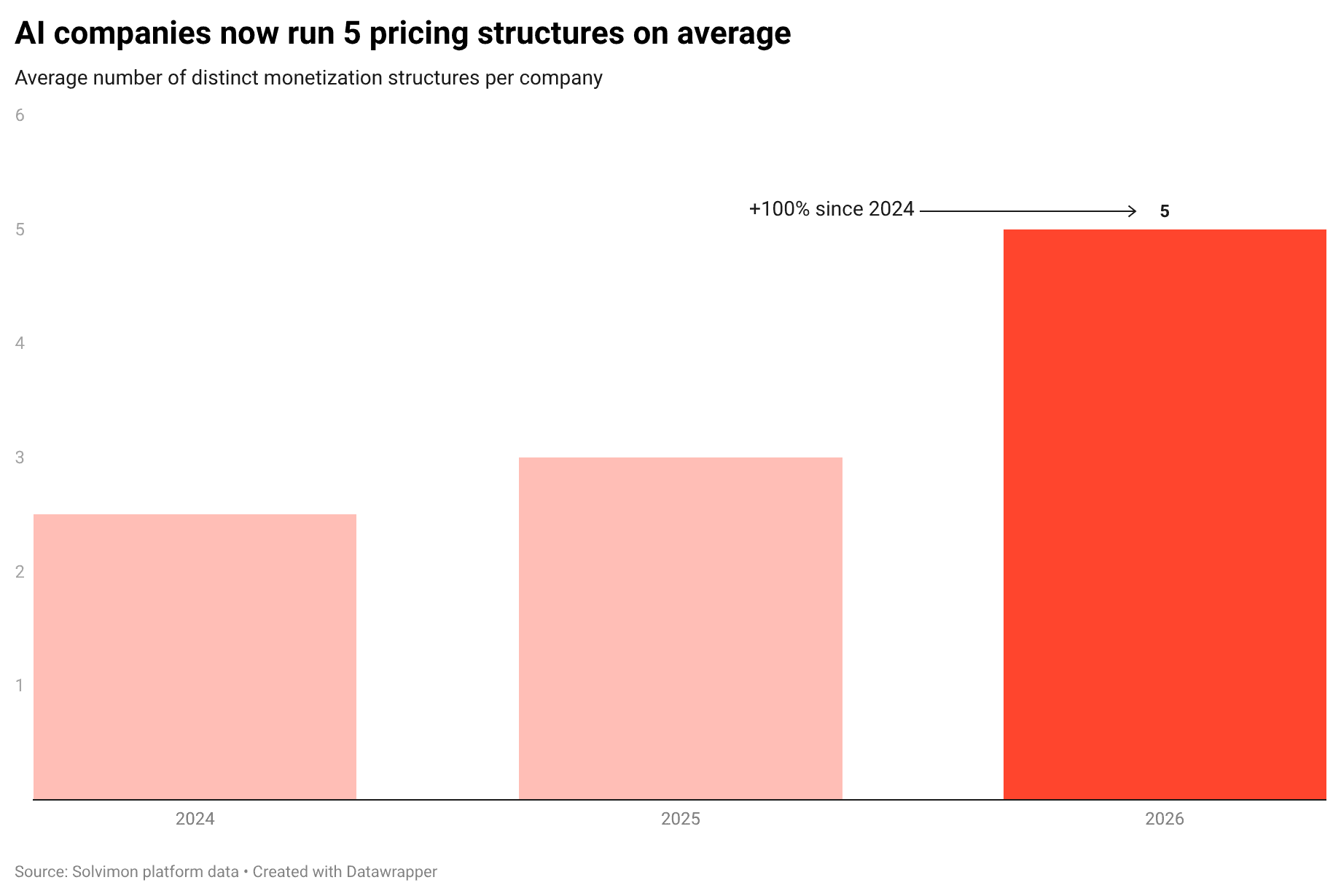
The fastest-growing AI and SaaS companies we work with now run an average of five distinct monetization structures: seats, usage, credits, commits, outcome tiers. A year ago it was three, and just over 2 in 2024.
This growth reflects how their products deliver value in 2026. When an AI feature costs lots of compute per call and one customer uses it ten times more than the next, flat pricing and seat pricing no longer represents the relationship accurately, where hybrid pricing does a much better job.
Bain & Company looked at 30+ established SaaS vendors and found 65% have already layered AI usage or outcome metrics on top of traditional seat models. The companies we work with were ahead of that curve. Now the rest of the market is catching up.
What hybrid pricing looks like in practice
The mental model most people start with is that hybrid is subscription base plus usage overage.
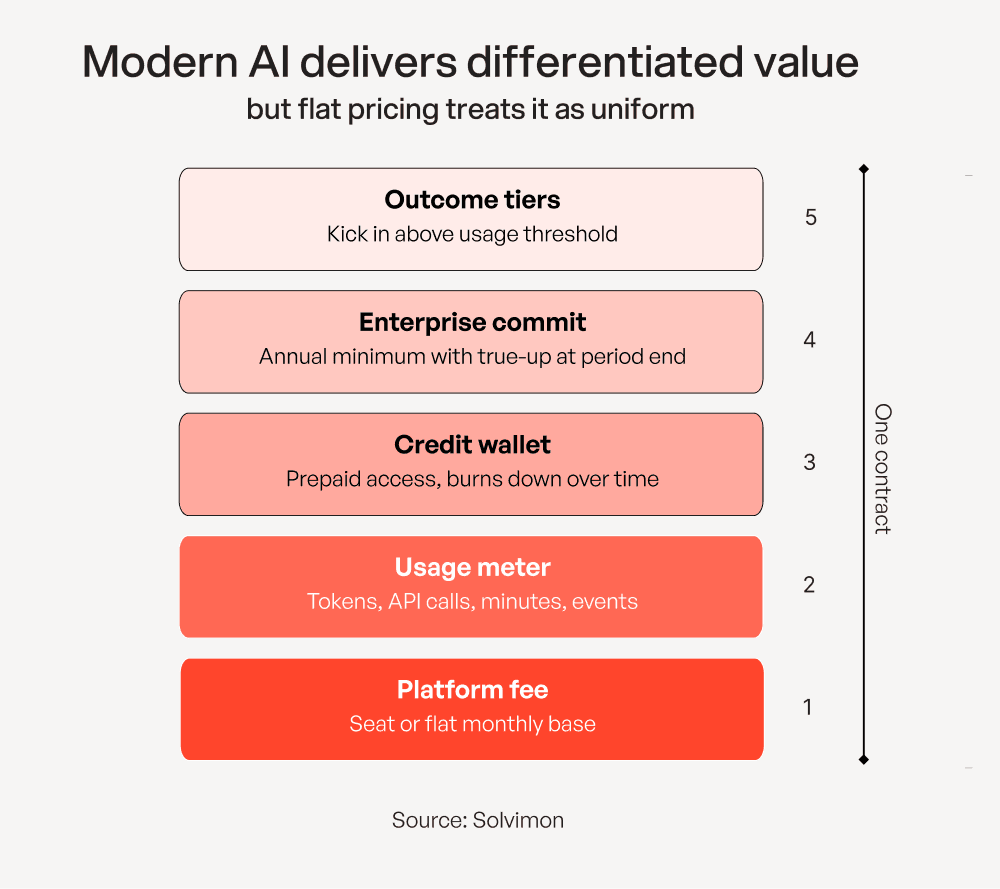
A more mature hybrid contract looks more compositional, as it might include:
a platform fee (seat or flat)
a usage meter on one or more AI features (tokens, API calls, minutes, events)
a credit wallet for prepaid access that burns down over time
an enterprise commit with a true-up at period end
outcome tiers that kick in above a certain usage threshold
We don't see these as exotic anymore, variations of them exist in Solvimon's customer base today.
For AI companies, hybrid is already here.
Why CFOs should be paying attention now
Revenue leakage in complex billing is quiet but dangerous - and hybrid pricing amplifies this risk because every pricing dimension is another place where a misconfiguration can embed itself and repeat. Imagine just one enterprise commit incorrectly implemented to the true-up logic correctly - if you don't have one system that handles the seat, the usage meter, the credit wallet, and the commit in the same contract the leakage will compound.
What we're building for
We started Solvimon after seeing this problem at scale at Adyen, where we processed close to a trillion euros a year. Billing was the system that could break everything else, and the hardest to fix once complexity had set in.
The companies coming to us now are growing, adding AI features, and hitting the natural ceiling of whatever billing setup got them to $5M to $10M ARR. Reson8 runs GPU clusters and sells speech by the minute, and they needed billing that could handle credit-based pricing across different workload types from day one. Gigs and Duna both carry real pricing complexity a standard setup can't hold.
The market has decided where pricing is going, with hybrid being the model for AI companies.
If you're a CFO or founder navigating this transition, we'd like to talk.
Ready for billing v2?
Solvimon is monetization infrastructure for companies that have outgrown billing v1. One system, entire lifecycle, built by the team that did this at Adyen.

