
Billing is having its moment

News
Read time: 5 min

Arnon Shimoni
✓ Expert opinion
Our CEO Kim said something on stage on March 24th that I really liked - he was talking about the early days at Adyen, when payments were plumbing - a back-office that nobody wanted to work on, think about, or show up to events about. Then Adyen and Stripe turned payments into infrastructure, and the industry reorganized around it.
Billing is having that moment, and 75 people showed up on a Tuesday evening in Amsterdam to prove it.
What it was about
We launched Solvimon for AI at Rivvia in Amsterdam on March 24th. We planned for ~60, hit the cap, opened a waitlist, extended to 75 and still had people standing along the walls.
Outside, crews were removing bikes from the street for a Brad Pitt film shoot but inside, we were talking about credit ledgers and margin visibility.
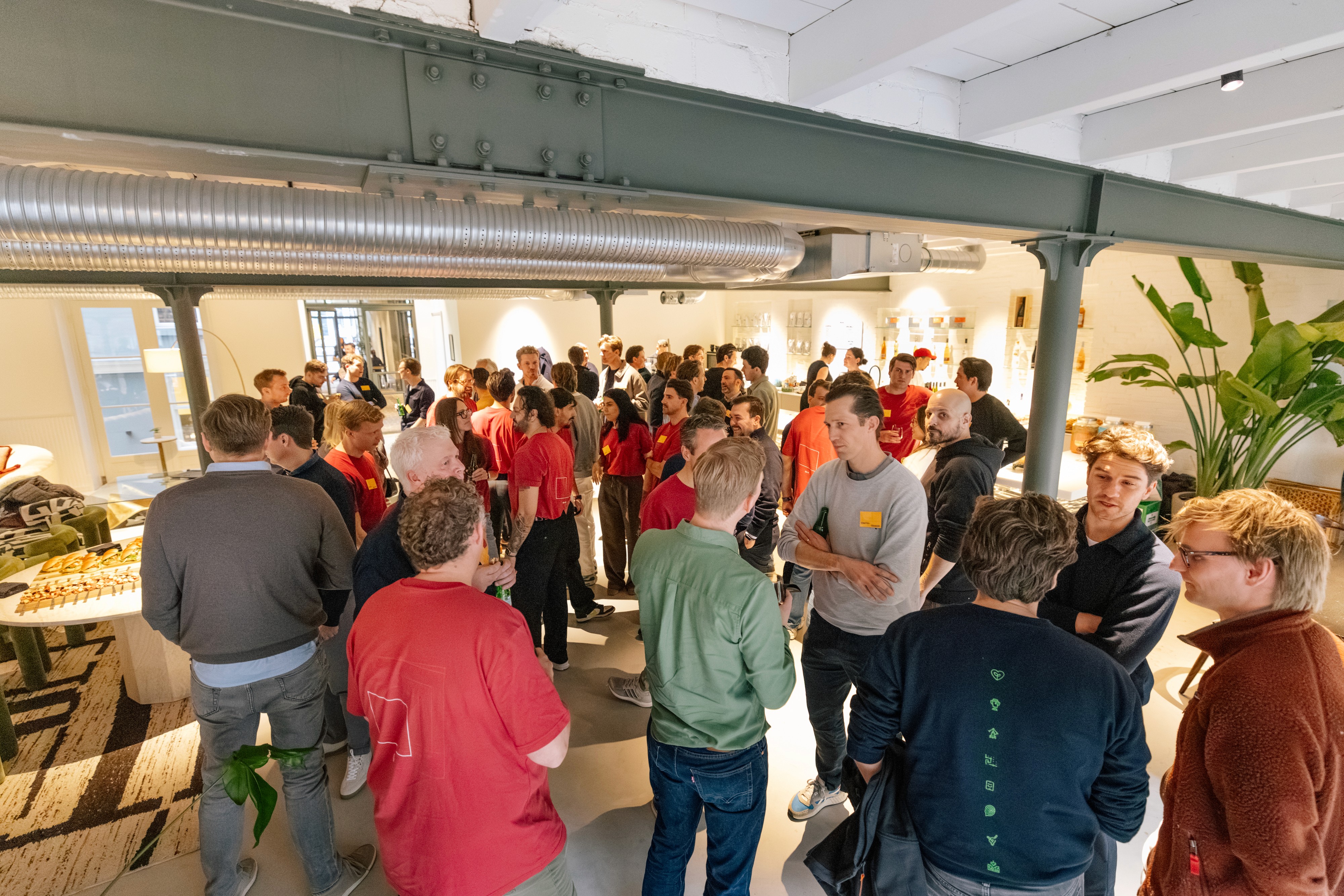
The crowd was a usual mix you'd see in Silcon Valley - but in Amsterdam. CTOs who run billing teams at companies like Miro, Lleverage, Gigs, GoDutch, Veed.io, and more. We also had founders fresh off their pre-seed and investors trying to parse AI monetization, as well as pricing consultants and old Adyen colleagues.
Of course, we had Solvimon customers who came in to meet the team building their billing infrastructure - and that group is pretty meaningful to me. I know lots of customers that don't show up to vendor events unless you're solving something real (or you're like, really hot).
What we announced
We unveiled Solvimon for AI, a dedicated offering for AI companies that need monetization infrastructure from day one. Not bolted on after the pricing model changes for the third time.

AI companies hit the billing wall faster than any other category. They start with a flat subscription, add usage metering within months, introduce credits because customers demand predictability, then land their first enterprise deal and realise nothing talks to each other. Within 18 months, two or three engineers are maintaining billing code full-time and finance can't close books without a spreadsheet.
We built the infrastructure that handles all of it in one system. Credits as ledger events. Hybrid pricing as configuration. PLG and SLG billing in one catalog. Kim and Etienne designed this architecture because they'd already built it at Adyen, processing ~$1T a year.
Thomas from Reson8Labs
Thomas from Reson8Labs opened the customer segment.
Reson8Labs raised a €5M pre-seed from Balderton Capital and they're building a hyper-custom speech engine on their own in-house infrastructure. Thomas walked the audience through the challenges of building a business like this - like why speech is SO complex, why he can't get enough compute, and even how billing looks for this when your margins are controlled by tokens.
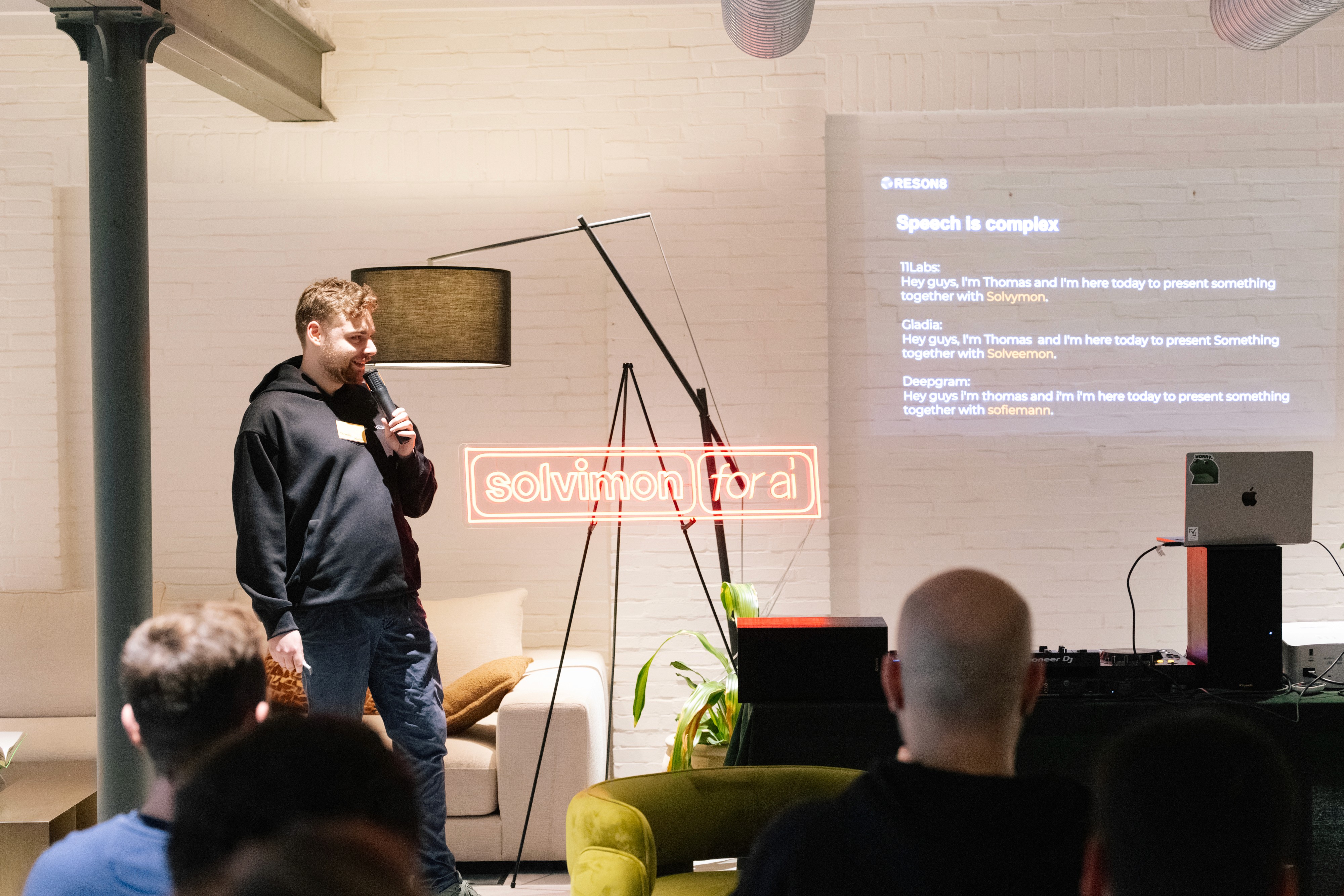
He didn't sugarcoat it. Before Solvimon, the options were: hack something together, build it in-house and dedicate half your engineering bandwidth, or accept that your pricing model would be limited by what your billing system could handle.
Thomas and the rest of Reson8 chose option four, naturally.
The fireside: "I tried to vibe code a billing system" with Pawel from Miro
This was the segment I was most looking forward to. Pawel runs Miro's billing team. Three or four years deep in billing complexity. And as a side project, he decided to test something: with modern AI coding tools, how hard can it be to build a billing system from scratch?
He spent four to five weeks on it. Used Zencoder and other AI tools, treating them like an engineer on the project. Specific UI direction, pointing at buttons, structuring the subscription flow. He got far. Customer creation, subscription management, invoice generation, add-ons. He modeled it on Stripe's subscription engine. It worked.

But it didn't fully work, because edge cases showed up. The gap between "it generates an invoice" and "it handles mid-cycle amendments, prorations, multi-entity reconciliation, and audit-ready revenue recognition at scale" is definitely there, so Pawel parked the project. He's considering restarting with Claude to see if the next generation of tools gets further. His honest take on stage was the whole point: billing looks simple until you're three weeks in and the last 20% of complexity turns out to be 80% of the work.
I loved this conversation because it matches what we hear from prospects constantly. AI coding tools will get you a working prototype fast. They will not get you production-grade billing infrastructure. The edge cases, the compliance requirements, the operational support at scale, that's what separates a side project from a system you trust with your revenue.
For context: at Storytel, we had 14 engineers on the monetization stack and it still wasn't enough.
Why it matters to me
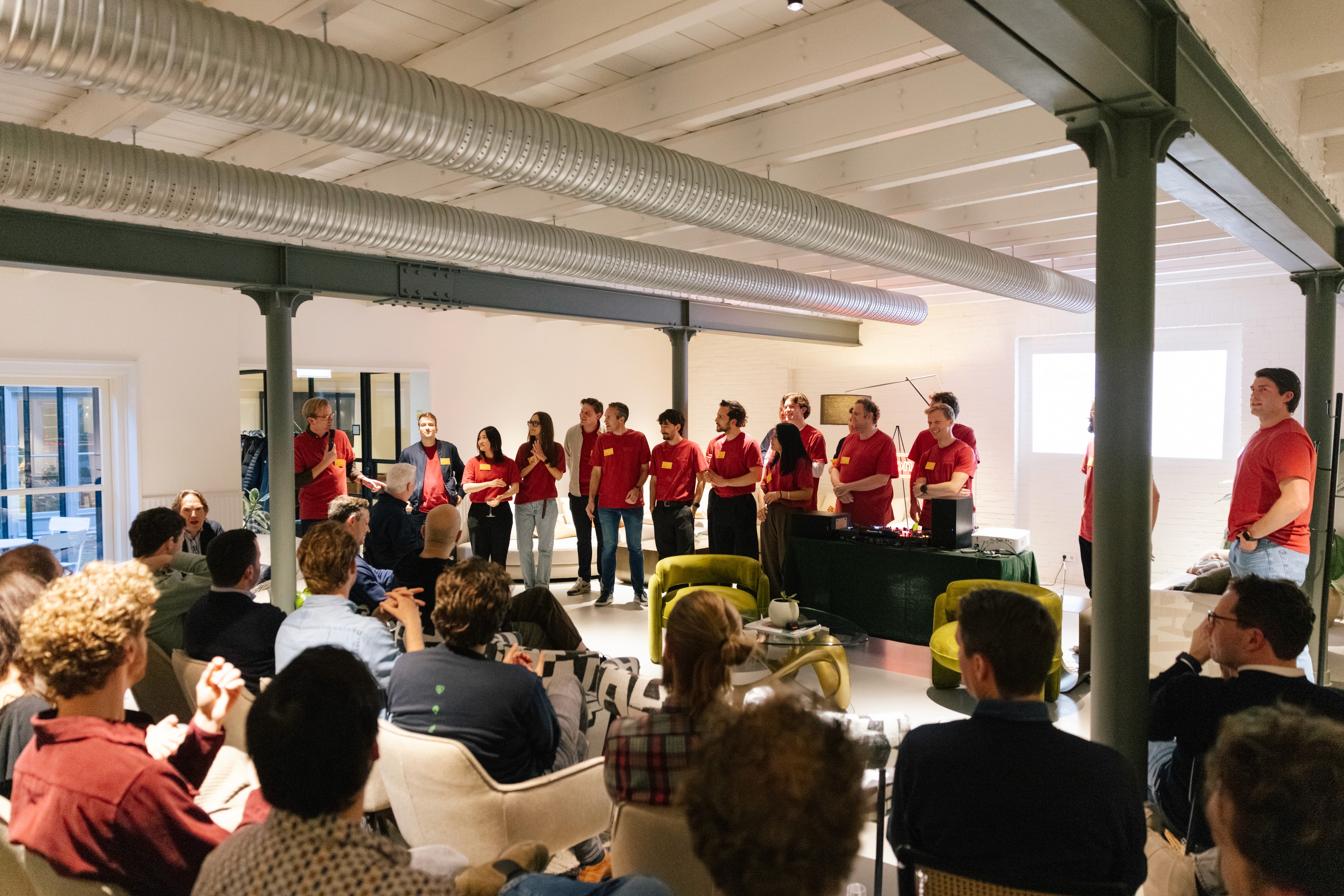
Kim closed the evening by bringing the Solvimon team on stage. About 25 people. The kind of company where the engineers who built the product are standing next to you at drinks afterward, explaining exactly why they made each architectural decision.
Kim's line about payments stuck because billing is following the same arc. Five years ago, billing was a cost center. You set it up with Stripe, forgot about it, dealt with the mess later. That worked when everybody charged per seat per month. It does not work when your pricing model includes seats, credits, usage metering, committed spend, and enterprise overrides on the same customer.
65% of SaaS companies adding AI features adopted hybrid pricing models last year (Bain). Credit-based models grew 126% year over year. 37% of AI companies plan to change their pricing model in the next 12 months.
The market moved but lots of the infrastructure hasn't yet.
If you missed it
We recorded the event. Watch the highlights below.
We're planning more this year. If you're building an AI product and your billing system is showing cracks, or if you're about to launch your first AI feature and want to get monetization right from the start: solvimon.com/forai.
If you were on the waitlist, we owe you one!
I've noted that next time, we'll grab a bigger room.
Ready for billing v2?
Solvimon is monetization infrastructure for companies that have outgrown billing v1. One system, entire lifecycle, built by the team that did this at Adyen.