The Best Billing Alternatives in 2026 to Stripe, Orb, and Metronome

Billing
Read time: 12 min

Arnon Shimoni
✓ Expert opinion
In January 2026 Stripe acquired Metronome - if you're running billing on Metronome, that single event changed the decision you thought you already made.
Vendor consolidation is one reason teams search for alternatives. The older reason, the one that hasn't changed, is simpler: usage-based billing systems tend to break at the exact moment you need them not to. The company hits $10-15M ARR. Pricing gets more complex. Finance needs revenue recognition. Sales closes enterprise contracts with custom terms. And the billing system starts requiring engineers to hold it together.
This guide is for teams who've hit one of those walls.
Why are teams switching billing platforms in 2026?
The Stripe Billing ceiling
Stripe is excellent payment infrastructure. Its billing layer is a sensible starting point. But configuring complex usage-based pricing, running enterprise quotes, or getting MRR/ARR visibility without manual exports requires engineering time that most teams would rather spend on product.
The Orb problem
Orb does event ingestion and SQL-based metrics well. It doesn't cover quoting, doesn't do revenue recognition natively, and the wider billing workflow still needs gluing together from multiple tools. Teams that started with Orb for metering frequently end up recreating exactly the fragmentation they were trying to avoid.
The Metronome question
Metronome's metering engine is strong. Stripe's ownership of it introduces vendor consolidation risk, particularly for teams using non-Stripe payment processors like Adyen, GoCardless, or Airwallex. The question isn't whether the product is technically capable today. It's whether the roadmap stays independent.
Comparison at a glance
Platform | Best for | Core strength | Core gap | Pricing |
|---|---|---|---|---|
Solvimon ⭐ | AI/SaaS needing headless monetization for agents and humans | Full billing stack, Headless monetization and MCP-native, agent-ready. Adyen Payments built-in, but also PSP agnostic. | Newer player | % of revenue; first $3M free for AI companies |
Stripe Billing | Early-stage with simple subscriptions | Payment infrastructure, developer ecosystem | Complex billing requires heavy engineering. Have to use Stripe payments Expensive | 0.5-0.8% of billing volume |
Metronome | High-volume metering, Stripe-native teams | Real-time event ingestion at scale | Now Stripe-owned; duplicate-invoicing with Stripe, no CPQ. | Custom |
Orb | Usage-based pricing with SQL-defined metrics | Flexible metering, pricing iteration speed | Gaps in quoting and rev rec | Custom |
Lago | Dev teams wanting open-source control | Self-hostable, transparent billing logic | Requires engineering investment, not as open-source as it seems | Free (self-hosted) / Custom (cloud) |
Chargebee | Mid-market subscription-led growth | Subscription lifecycle, self-serve portal | Usage-based billing less mature | From $599/month |
Maxio | Finance teams needing billing and ASC 606 | Revenue recognition built-in | Steep learning curve | From $599/month |
Zuora | Large enterprises | Highly configurable, global compliance | >9 month implementation, high cost, dated | Custom |
The platforms in detail
Solvimon
The idea behind it
Most billing platforms were built around one assumption: a human will always be there to click. That assumption is breaking. AI agents are already procuring, configuring, and operating software. Billing systems that require a dashboard for every operation will become the bottleneck. Not immediately, but soon enough that it matters now.
Solvimon is billing infrastructure built by ex-Adyen engineers who ran billing at over €1 trillion in annual payment volume. The platform covers the full stack: metering, pricing, invoicing, revenue recognition, and CPQ. Every operation is available as an API call, an MCP tool, or a CLI command. The UI works. It's just not the only way in.
Solvimon's MCP lets you build turnkey pricing pages with one command:
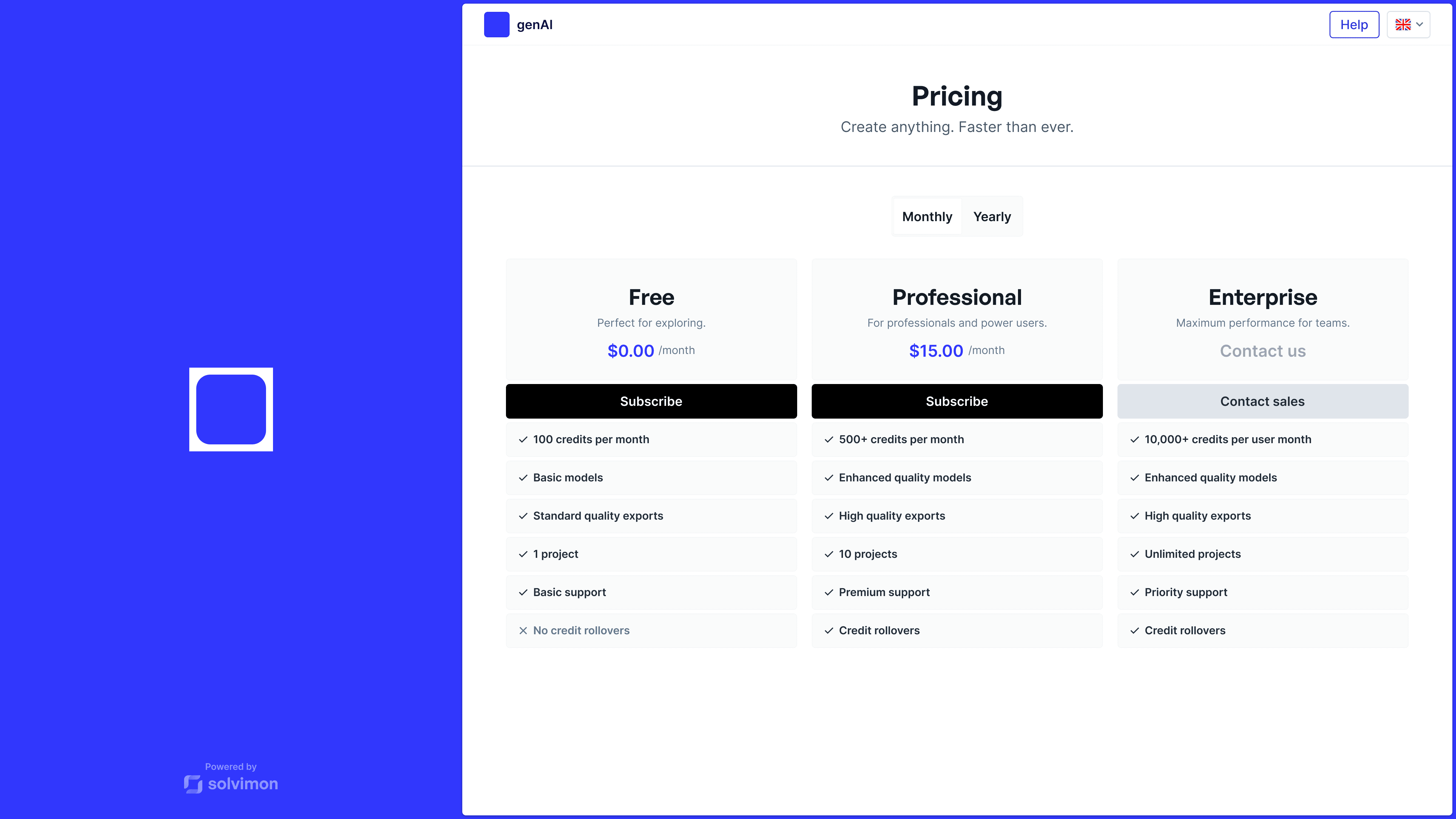
When your pricing changes, you don't wait for someone to log in and click through a wizard. When an agent needs to provision a customer, it makes an API call. When your CFO wants revenue data, it's there, pulled directly, not assembled from a Stripe export.
What it covers
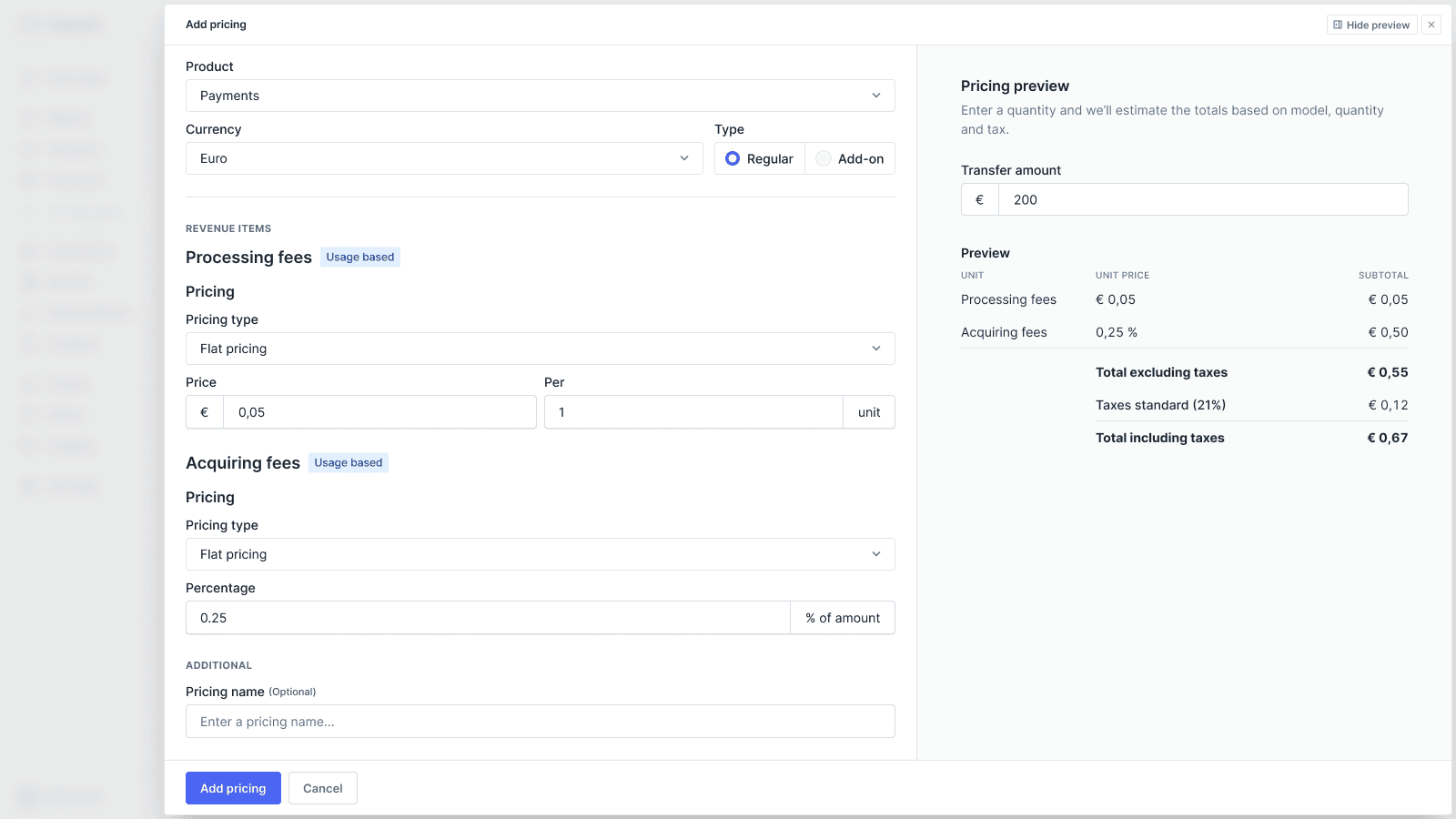
Full quote-to-revenue workflow: CPQ, contracts, billing, invoicing, rev rec
Usage-based, subscription, seat-based, hybrid, and credit-based pricing
Headless architecture: API, MCP, CLI, and UI over a single source of truth
Real-time MRR/ARR/NRR dashboards without manual reconciliation
Payment-processor-agnostic: works with Stripe, Adyen, and others
Who it's for
AI-native and B2B SaaS companies past the point where Stripe is enough, who want billing infrastructure that works whether a human or an agent is operating it.
Limitation
Solvimon is a newer player, with fewer third-party integrations than legacy platforms.
Pricing
0.4% of revenue, but up to 60% cheaper than Stripe when including payments.
The first $3M in revenue processed is free for AI companies, which covers most of the evaluation and early-scale period before any fees apply.
Stripe Billing
The idea behind it
The default starting point for most SaaS companies. Stripe's payment infrastructure has wide payment method coverage, deep API documentation, and a developer ecosystem that's hard to match.
The billing layer is a different story. Implementing complex usage-based pricing or custom enterprise contracts in Stripe means engineers write the logic, maintain it, and handle every pricing change. There's no native CPQ, no MRR dashboard, and revenue recognition requires a separate tool.
For early-stage companies with simple subscriptions and strong engineering resources, Stripe Billing works. For companies scaling past that point, it tends to become the problem you eventually have to solve.
What it covers
Subscription management: trials, proration, plan upgrades, cancellations
Metered billing via API for usage-based pricing
Automated invoicing with branded customer portal
Smart payment retries and dunning
Massive integration ecosystem
Who it's for
Early-stage companies with straightforward recurring billing and the engineering bandwidth to own the billing logic.
Limitation
Every pricing change requires engineering. No native quoting, no MRR/ARR reporting. Percentage fees compound at scale.
Pricing
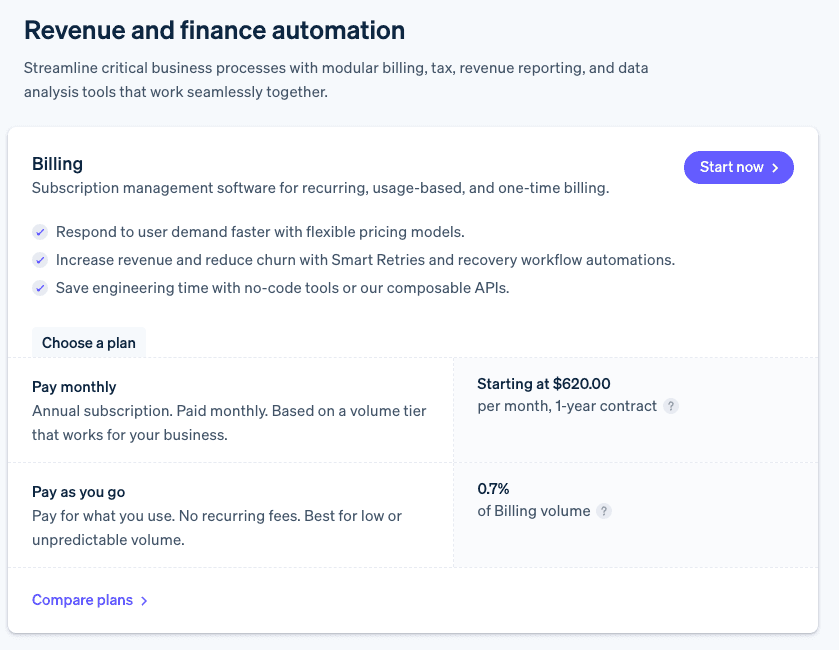
0.7% for basic billing, but it adds up when you add payments.
Metronome
The idea behind it
Metronome built the usage metering infrastructure behind OpenAI, Anthropic, Databricks, and NVIDIA. Real-time event ingestion at 100,000+ events per second, rate cards, prepaid credit drawdown. For high-throughput AI and infrastructure products, the technical capability is real.
Stripe acquired Metronome in January 2026 for approximately $1 billion. The question teams are now asking: does the roadmap stay independent, or does it drift toward deeper Stripe integration? Teams using Adyen, GoCardless, or other payment processors have a legitimate concern about what that consolidation means over 24 months.
What it covers
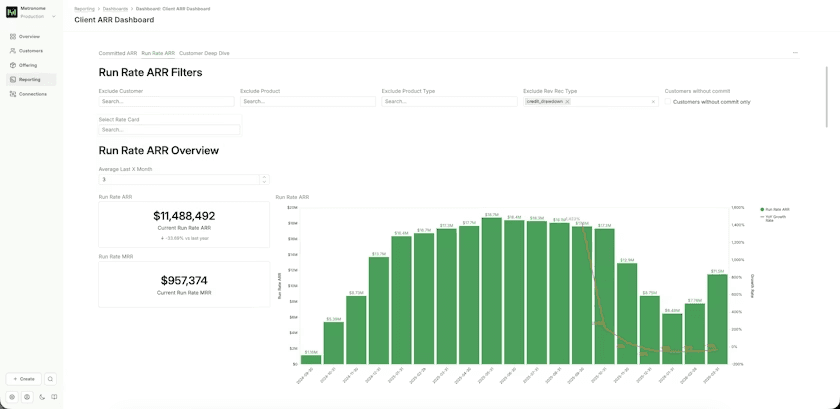
High-throughput event ingestion and real-time usage rating
Rate cards and tiered pricing models
Prepaid credit management and drawdown tracking
Embeddable customer usage dashboards
Native Stripe integration for invoicing and payments
Who it's for
Engineering-led teams with high-volume usage billing already committed to the Stripe ecosystem.
Limitations
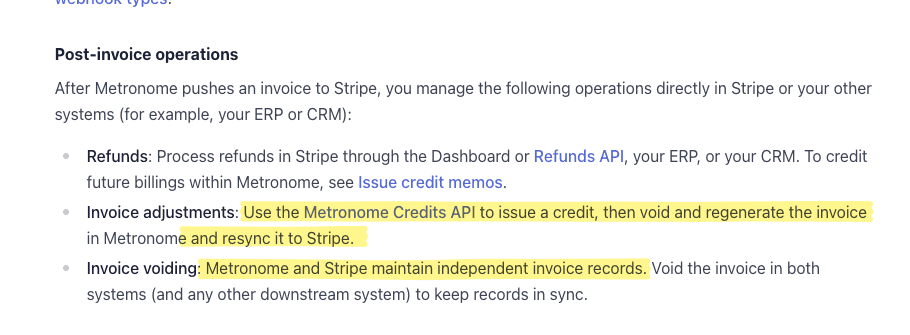
No built-in invoicing or CPQ. No billing portal. Limited non-technical team access. Historical data backfill requires workarounds. Post-acquisition roadmap uncertainty for teams outside the Stripe ecosystem.
You still have to glue together multiple systems.
Pricing
Custom.
Orb
The idea behind it
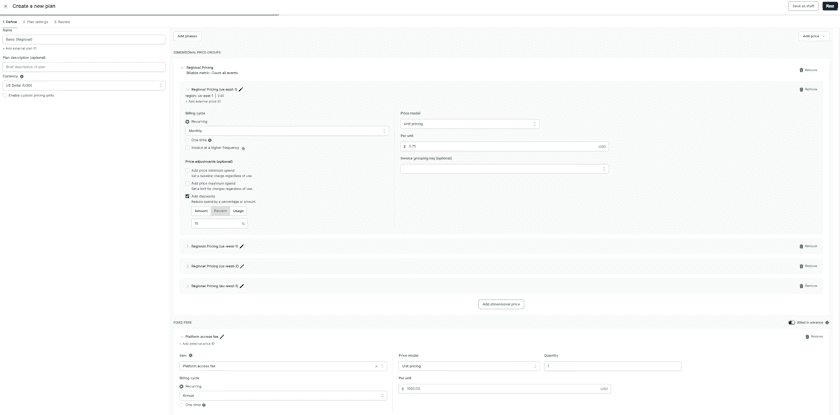
Orb's differentiation is SQL-defined billing metrics. Instead of pre-aggregating events, Orb stores raw event history and calculates invoices against it at billing time. Late events get included automatically. Retroactive pricing changes are possible without re-ingesting data. Teams can simulate pricing updates against historical usage before going live.
That's genuinely useful for companies where billing accuracy is the primary problem and the engineering team has the capacity to configure and maintain it.
What it covers
SQL-based custom billing metric definitions
Raw event history with retroactive pricing support
Usage simulations against historical data
Flexible pricing model configuration
Integration with Stripe and other payment processors
Who it's for
Growth-stage AI and infrastructure companies that need SQL-level control over billing logic and have engineering resources to match.
Limitations
No CPQ, no native revenue recognition. The quote-to-cash workflow requires additional tools. Teams frequently end up maintaining multiple integrations alongside Orb.
Pricing
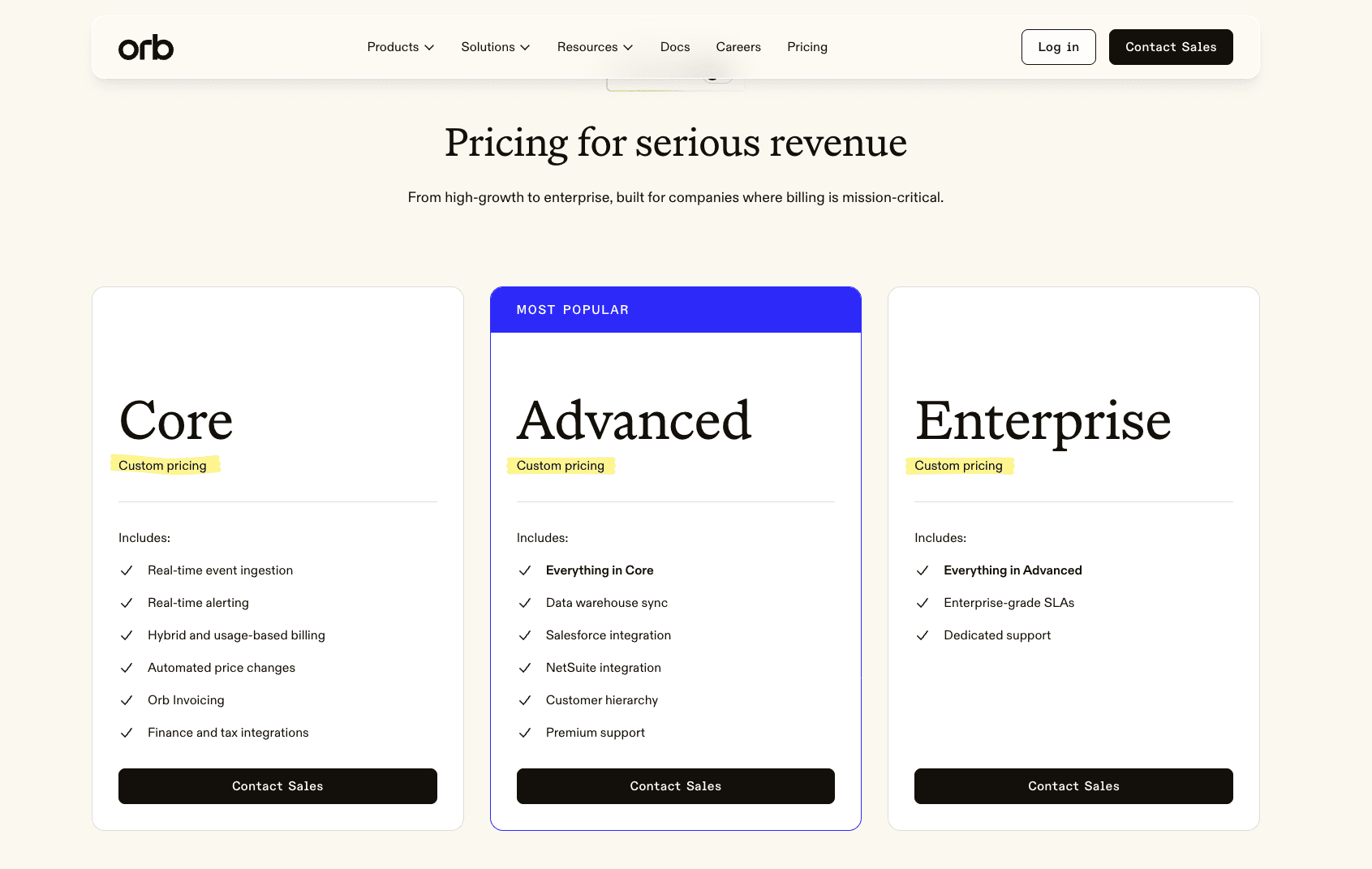
Custom and hidden.
Lago
The idea behind it
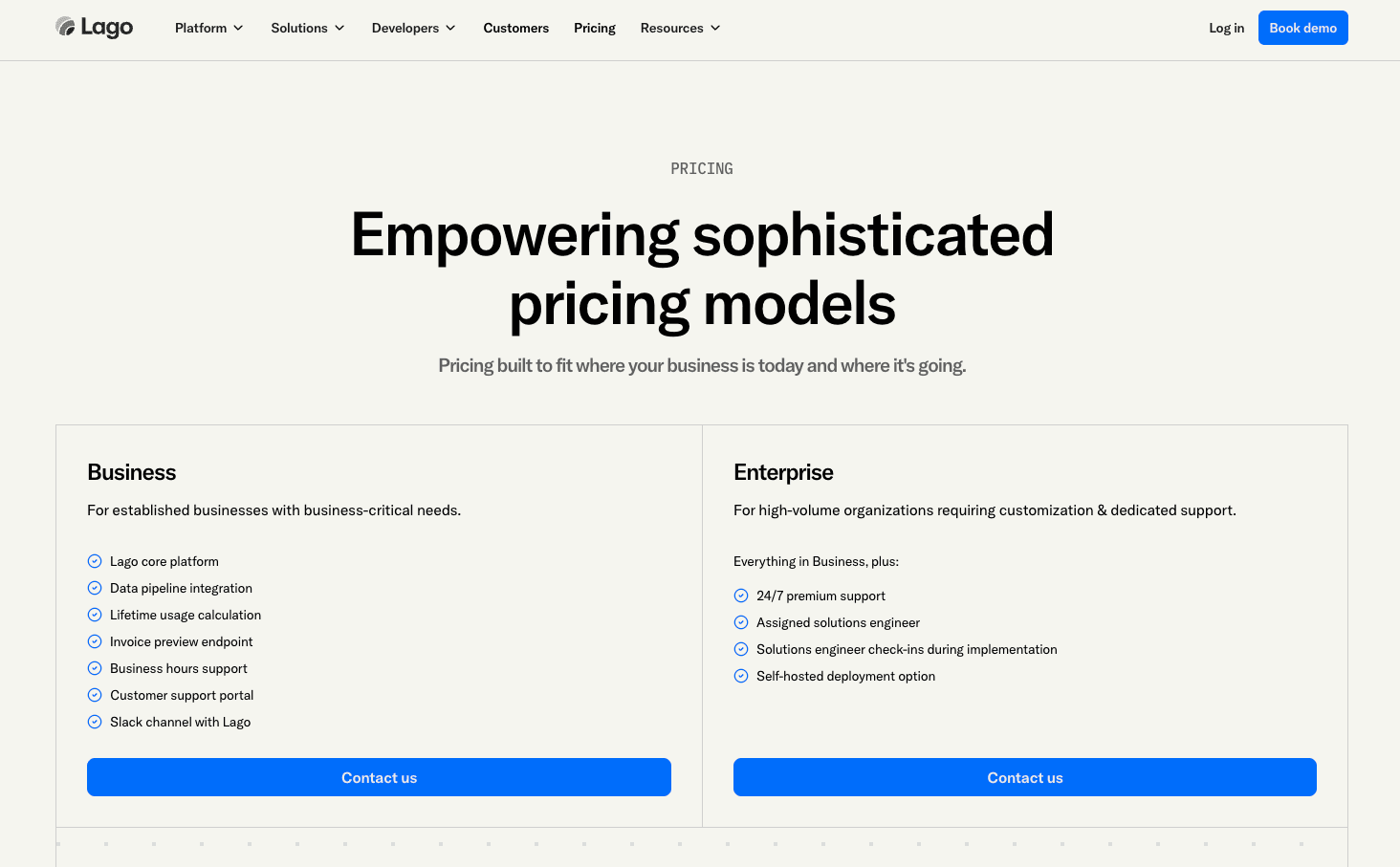
Lago is fully open source, self-hostable, and used by Mistral AI, Algolia, and GitHub. If your engineering team wants to inspect the billing logic, debug at the engine level, or self-host for data residency reasons, Lago is a credible option.
Full control also means full responsibility. Lago gives you building blocks. Your team assembles the system. For teams with strong engineering resources and specific compliance or residency requirements, that trade makes sense. For teams that want billing to run without ongoing engineering involvement, it doesn't.
What it covers
Open-source metering and billing engine
Self-hosted or managed cloud deployment
Usage-based, subscription, and hybrid billing
Processes up to 1M events per second
Active developer community
Who it's for
Engineering teams that want code ownership, data residency control, or want to avoid vendor lock-in entirely.
Limitation
Requires sustained engineering investment. Not suited for finance or RevOps teams who need to operate billing independently.
Pricing
Free for self-hosted. Cloud pricing is custom and not public.
Chargebee
The idea behind it
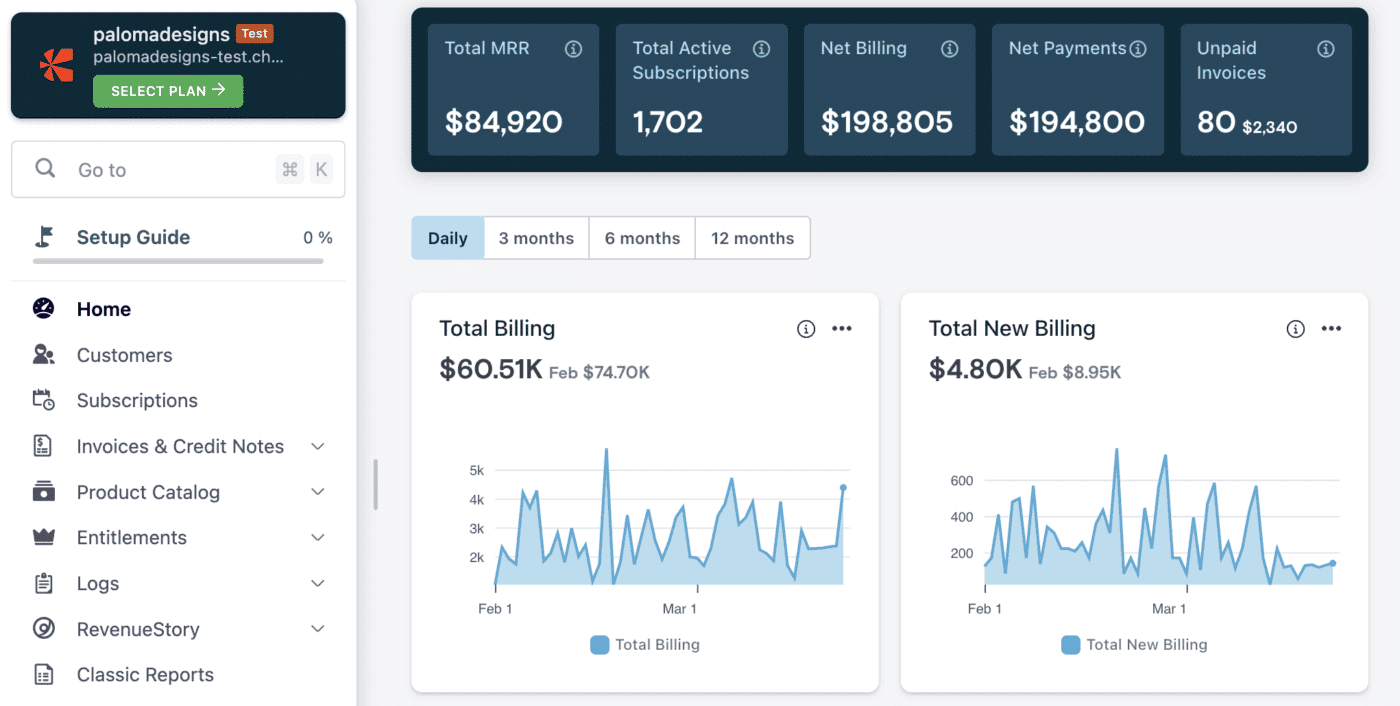
Chargebee has one of the most mature subscription management products on the market. Trials, plan changes, renewals, proration, dunning: the full subscription lifecycle is well-covered. Its customer self-serve portal reduces support load. CRM and accounting integrations are solid out of the box.
The limitation is usage-based billing. Chargebee has added metered capabilities, but they're less flexible for companies where usage is the primary pricing mechanism. At higher revenue volumes, pricing tiers also become expensive relative to what you get.
What it covers
Full subscription lifecycle management
Customer self-serve portal
Revenue recognition module (higher tiers only)
Native Salesforce, HubSpot, QuickBooks, and Xero integrations
Automated dunning and failed payment recovery
Who it's for
Mid-market SaaS companies with subscription-led or product-led growth where self-serve and CRM integrations are the priority.
Limitation
Usage-based billing is less flexible for complex metering scenarios. Revenue recognition is locked to higher-tier plans.
Pricing
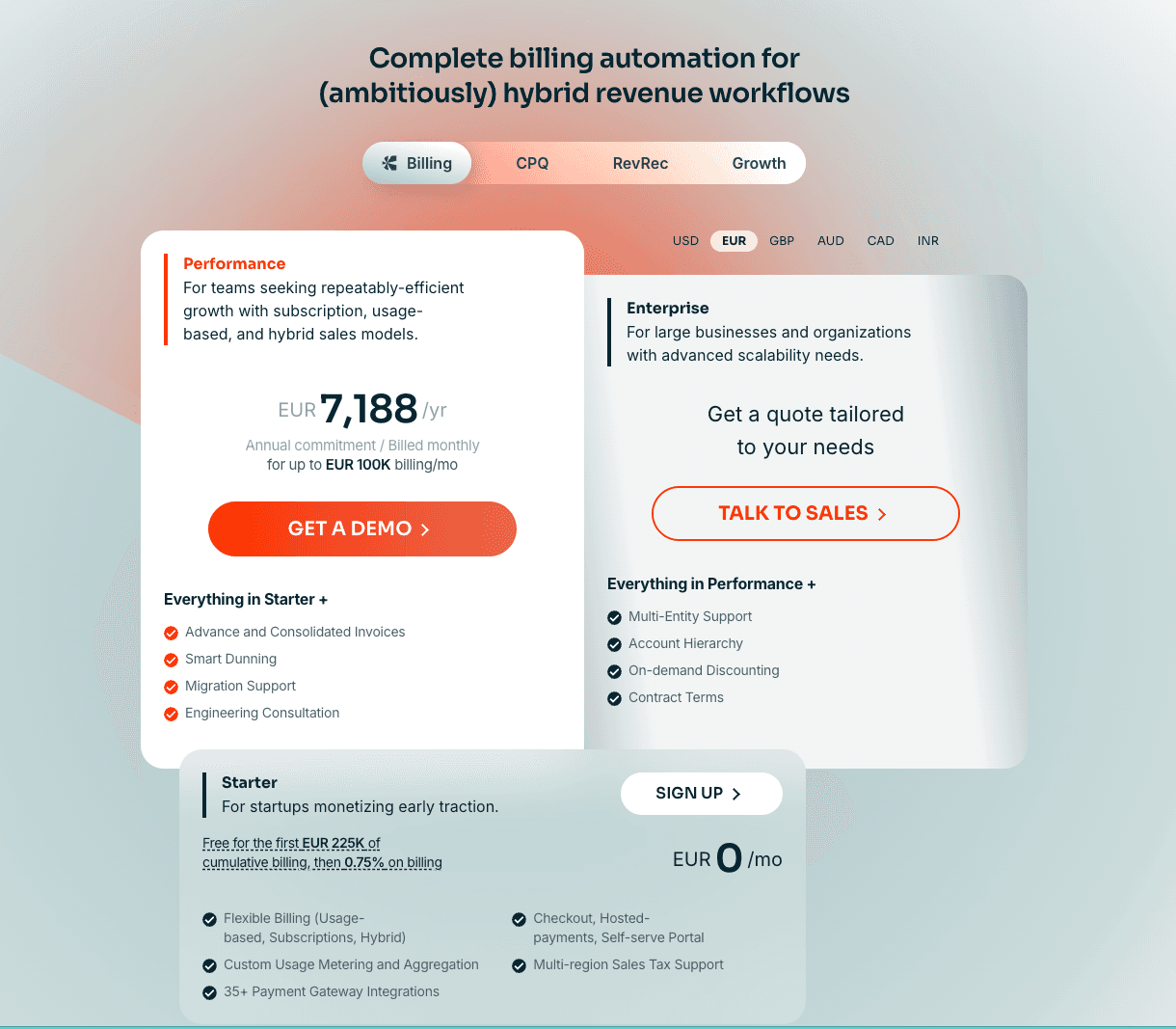
From $599/month, but compounds quickly. Free tier not very generous, with only $250k allowed.
Maxio
The idea behind it
Maxio was formed from the merger of SaaSOptics and Chargify. The combination gives CFOs something billing-only platforms don't: ASC 606 revenue recognition built directly into the billing workflow. MRR, ARR, churn, and expansion reporting that finance and investors rely on.
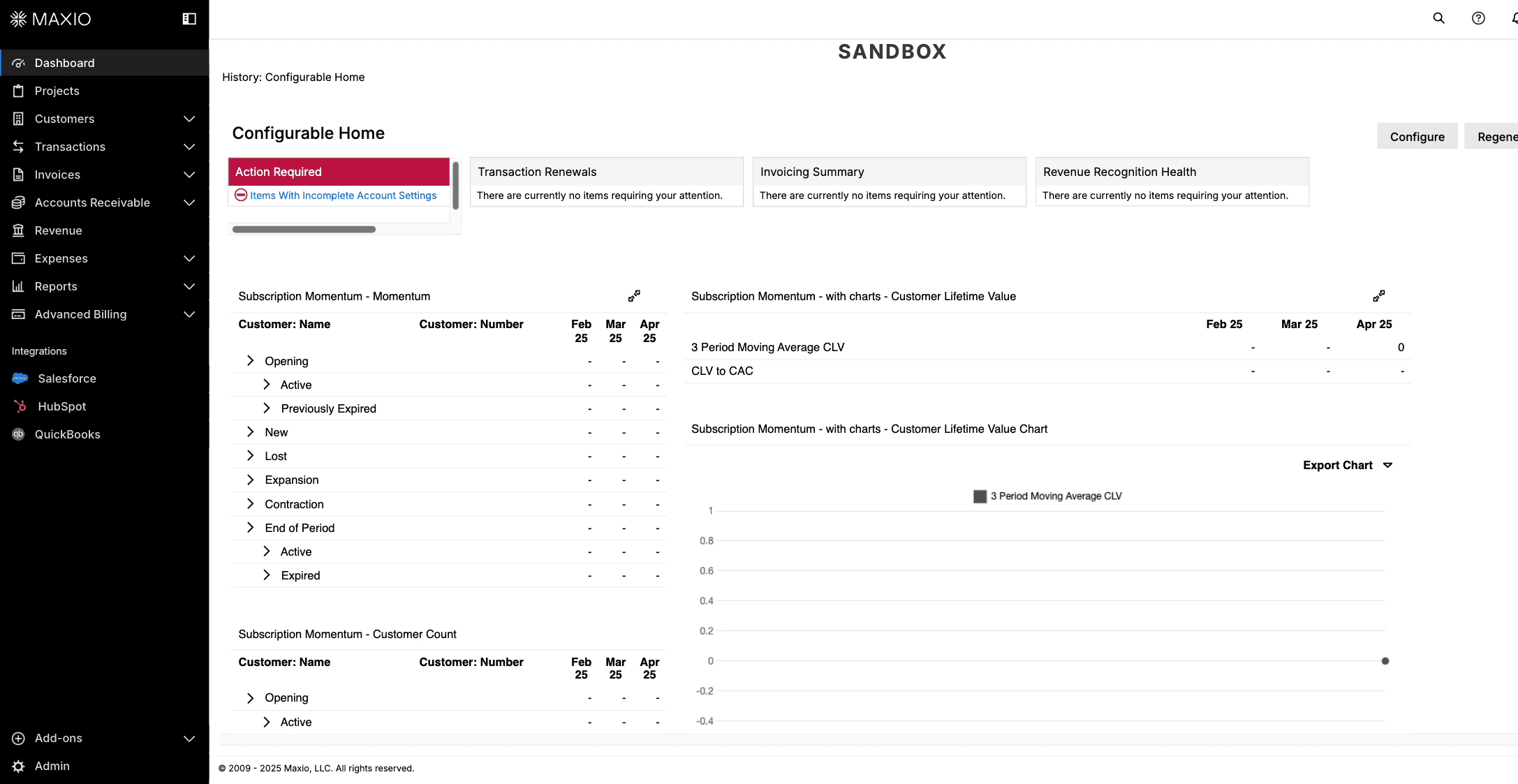
The interface reflects that heritage as two merged products. It's not the most intuitive onboarding experience and customer support response times vary. For companies where revenue recognition is the primary driver of tool selection, Maxio earns consideration. For companies where usage-based billing is central, it's less well suited.
What it covers
Subscription and usage-based billing
ASC 606-compliant revenue recognition out of the box
SaaS metrics dashboards for finance and investors
Multi-year contract and amendment management
Native NetSuite, QuickBooks, and Salesforce integrations
Who it's for
B2B SaaS companies preparing for audit, fundraising, or acquisition where financial reporting accuracy is the top priority.
Limitation
Dated UI. Steeper learning curve. Heavy usage metering scenarios are outside its core strength.
Pricing
From $599, but with only $100k allowed monthly.
Zuora
The idea behind it
Zuora is the legacy incumbent. For large public companies with dedicated billing operations teams, complex multi-entity setups, and audit requirements, it has the depth to match. Implementations typically take 6 to 12 months. Total cost of ownership is high. Pricing changes after go-live require operational effort. It's built for companies with the resources to run it like a system.
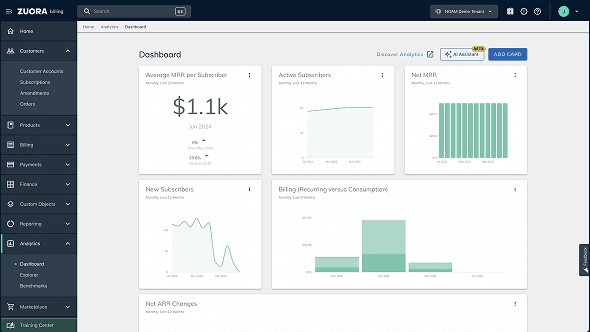
For companies below a certain revenue threshold, or those that want to iterate on pricing without a change request process, it's the wrong tool.
What it covers
Highly configurable billing for complex enterprise structures
Full ASC 606/IFRS 15 revenue recognition
Deep Salesforce, SAP, and Oracle integrations
Multi-jurisdiction tax compliance
Order management including amendments and transformations
Who it's for
Large enterprises or publicly traded companies with dedicated billing operations teams, complex compliance requirements, and the budget to match.
Limitation
Very expensive. Long implementation timelines. Slow to iterate once live.
Pricing
Custom enterprise, often in the hundreds of thousands of dollars.
How to choose
The right billing platform depends on which constraint you've already hit.
If engineers are doing billing work
The engineering tax is already running. You need a platform where finance and RevOps can make billing changes without filing a ticket. Solvimon covers this alongside complex usage scenarios that Chargebee and Maxio don't handle well.
If you're running high-volume metering on Stripe
Metronome and Orb remain technically capable for that specific problem. Understand the acquisition implications for Metronome before committing.
If you need quote-to-cash without stitching tools together
Solvimon covers CPQ, contracts, billing, invoicing, and revenue recognition in one system. That's the short list of platforms that actually do this end-to-end.
If you're early-stage with simple recurring billing
Stripe Billing is still a reasonable starting point. Plan for the migration you'll eventually need.
If you need open-source control or strict data residency
Lago.
If you're a large enterprise with dedicated billing operations
Zuora.
One question to ask every vendor before you commit
Ask how they handle mid-cycle plan changes, custom pricing exceptions, and billing errors. That's where real billing complexity lives. The platforms that handle those scenarios cleanly, without engineering workarounds, are the ones where billing actually runs on autopilot.
Frequently asked questions
What is the best alternative to Stripe Billing for usage-based pricing?
Solvimon covers the full billing stack: native usage metering, CPQ, and revenue recognition without engineering dependency. Despite the strong connection to Adyen, it's also payment-processor-agnostic so you're not locked into any ecosystem unlike Stripe. For metering-heavy teams already committed to Stripe, Orb is the specialist option if you're not keen on Metronome.
What is the best alternative to Orb?
Orb handles usage metering well but leaves the rest of the billing workflow to other tools. Solvimon covers everything Orb covers plus quoting, contracts, invoicing, and revenue recognition in one system.
What is the best alternative to Metronome after the Stripe acquisition?
Solvimon is payment-processor-agnostic and covers the full stack. For teams that need pure metering at high throughput and want open-source control, Lago is the alternative.
What's the difference between a billing platform and a payment processor?
A payment processor (Stripe, Adyen, GoCardless) handles the mechanics of collecting money: charging cards, processing bank transfers. A billing platform handles the logic of when to charge, how much, and what to invoice for. Most billing platforms integrate with your existing payment processor rather than replacing it.
When should a SaaS company move off Stripe Billing?
The common trigger: your engineering team is maintaining billing logic instead of building product. Other signals include needing usage-based or hybrid pricing without infrastructure to support it, finance doing manual revenue reporting from Stripe exports, or closing enterprise deals that need a CPQ workflow.
Does billing platform pricing matter as much as the features?
More than most teams expect. Percentage-based fees that look small at $2M ARR become material at $10M. Run your current ARR and your 24-month projection through the fee models before deciding. Solvimon processes the first $3M free for AI companies, which covers most of the evaluation and early-scale period before any fees apply.
What is the difference between Orb and Metronome?
Both are usage-based billing platforms. Orb uses query-based metric definitions over raw event history, which handles retroactive pricing changes and late events cleanly. Metronome focuses on high-throughput real-time metering with rate cards and prepaid credit management. Stripe acquired Metronome in January 2026. Neither covers the full billing stack: no CPQ, no native invoicing, limited revenue recognition.
Can an AI agent use a billing platform to provision customers or change pricing?
Most billing platforms require a human to log in and click through a dashboard. Solvimon is built differently: every billing operation is available as an API call, an MCP tool, or a CLI command. Agents can provision customers, adjust rate cards, and pull revenue data without human involvement.
What billing comparisons usually skip
Every comparison post describes features. Few describe what happens six months after go-live.
Billing migrations are genuinely risky. Customer data, payment methods, subscription terms, and billing history all have to move correctly. How much of that work the vendor handles versus how much they leave to your engineering team often determines whether a migration takes two weeks or six months.
Pricing iteration matters just as much. Most billing platforms treat every change request like a vendor negotiation. You need a different tier structure. The vendor says Q3. Your competitors are shipping pricing experiments every few weeks.
The billing infrastructure that actually serves you isn't the one with the most features on a table, but the one where your team can make changes, handle exceptions, and iterate on pricing without engineering on every decision. Every company that crossed $15M ARR and had to migrate said the same thing: we should have done it sooner.
Ready for billing v2?
Solvimon is monetization infrastructure for companies that have outgrown billing v1. One system, entire lifecycle, built by the team that did this at Adyen.